
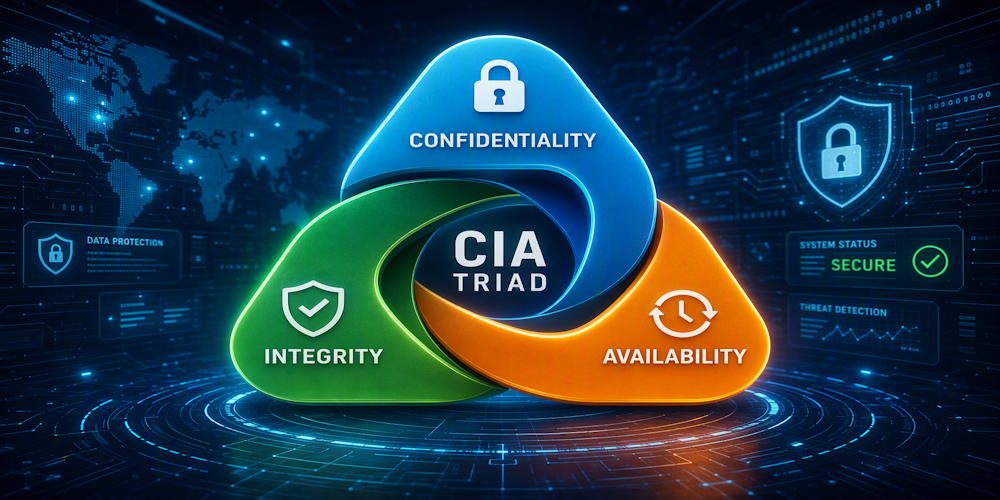
What is the CIA Triad in Information Security?
In cybersecurity, simple frameworks often do the most important work. The CIA Triad is one of them. In information security, CIA stands for confidentiality, integrity, and availability. These three ideas shape how you protect sensitive information, reduce cyber risk, and improve data protection across systems, networks, and applications. If you handle customer data, financial records, or other critical information, understanding this model helps you make smarter security choices and build a more reliable defense.
The CIA Triad is a foundational model in information security built around three core principles: confidentiality, integrity, and availability. It gives you a clear structure for thinking about what must be protected and how security systems should work.
Put simply, it helps security teams find vulnerabilities, choose security measures, and strengthen weak points. Why is the CIA Triad important for cybersecurity? Because a system is not truly secure if data is private but inaccurate, or accurate but unavailable when needed.
Origins and Purpose of the CIA Triad
The CIA Triad has long served as a foundational model for information security. While the exact creator of the term is unclear, the three ideas behind it have been used for a very long time to protect critical information. Today, it remains one of the most practical ways to organize security thinking.
At its core, the CIA Triad stands for confidentiality, integrity, and availability. These three pillars separate major security concerns into distinct focus areas. That makes it easier for you to review systems, test protections, and understand where your security policies may fall short.
Just as important, the model gives security teams a common language. You can use it to design controls, train employees, and review incidents after they happen. That clear purpose is why the CIA Triad still guides modern cybersecurity planning.
Why the CIA Triad Is Fundamental to Cybersecurity
Cyber security depends on protecting more than one thing at a time. You need to keep critical information private, accurate, and accessible. The CIA Triad matters because it covers all three needs through a simple set of core principles.
Think about a ransomware event. Your data may remain confidential, but if systems are locked, availability is damaged. Or consider a website attack that changes executive details. Access may still work, yet integrity is gone. The model helps you see these differences clearly and match the right security measures to each problem.
That is why the CIA Triad is fundamental. It gives you a high-level checklist for evaluating tools, permissions, and processes. If one element is missing, your overall protection is incomplete, even when other defenses appear strong.
How the CIA Triad Shapes Modern Cybersecurity Strategies
Modern security strategies often start with a basic question: what are you protecting, and from what? The CIA Triad helps answer that by linking security controls to specific outcomes such as privacy, accuracy, and reliable access.
For data protection, the model supports choices like access control, encryption, version control, monitoring, and disaster recovery. These are not random tools. They map directly to confidentiality, integrity, and availability. That structure helps security teams reduce cyber risk without losing sight of business needs.
It also shapes how organizations assess incidents and improve security systems afterward. If an attack disrupted availability but not confidentiality, you know where to strengthen defenses. This practical lens makes the CIA Triad useful in everyday planning, response, and long-term improvement.
Exploring the Core Elements: Confidentiality, Integrity, and Availability
The CIA security triad has three connected parts, and each one protects a different business need. Confidentiality keeps sensitive information away from unauthorized access. Integrity protects data integrity so information stays accurate and trustworthy.
Availability focuses on high availability, meaning systems and data remain usable when people need them. If one element fails, the others cannot fully carry the load. To see how this works in practice, let’s break down each part and the security controls behind it.
Confidentiality – Protecting Sensitive Data
Confidentiality is about keeping sensitive data private. You want only approved users to see confidential information, whether that includes financial records, personal data, patient records, or intellectual property. This part of the CIA Triad reduces the chance of unauthorized disclosure, whether caused by attackers or human error.
In practice, confidentiality depends on controlling who can view what. Good access control makes sure people without approval cannot reach restricted files, while the right employees still have the privileges they need to do their jobs.
Common ways to support confidentiality include:
- Data classification and labels for restricted files
- Access control policies based on roles and permissions
- Data encryption for stored and transmitted information
- Strong authentication such as multi-factor authentication
When these controls work together, you lower the risk of unauthorized access and strengthen overall data protection.
Integrity – Ensuring Accuracy and Trustworthiness
Integrity means your information is authentic, accurate, and reliable. In information security, that matters because bad data can damage trust just as much as stolen data. If attackers or careless users make unauthorized changes, decisions based on that information can quickly go wrong.
This part of the model focuses on preventing tampering and proving that data has not been altered. Organizations often monitor changes during storage, transfer, and processing so errors or abuse can be caught early.
Useful integrity controls include:
- Version control to track approved edits
- Data logs that record who changed what
- Digital signatures to verify origin and authenticity
- Hash functions or checksums to detect tampering
These tools help protect data integrity and make it easier to identify security breach activity, mistakes, or hidden manipulation.
Availability – Keeping Resources Accessible When Needed
Availability means users can reach data, systems, and applications when they need them. Even perfectly protected information loses value if people cannot access it. That is why reliable access is essential for daily work, customer service, and business continuity.
Many problems can hurt availability, including power outages, ransomware, denial-of-service attacks, software failures, or damage to technical infrastructure after a natural disaster. To reduce downtime, organizations build backup capacity and recovery options into their environments.
Common controls that support availability include:
- Redundant networks, servers, and applications
- Cloud-based backup for faster data recovery
- Disaster recovery and tested recovery plans
- Ongoing system upgrades and monitoring tools
These steps help maintain availability, support high availability goals, and restore critical services quickly after disruption.
Real-World Applications of the CIA Triad
The CIA Triad is not just a classroom idea. Organizations use it to shape security policies, protect critical information, and decide which systems need the strongest controls. It is especially useful when setting permissions, reviewing vulnerabilities, and planning data classification.
You also see it in incident reviews and continuity planning. After a disruption, teams ask which part failed and what worked. That makes the model valuable for improving business continuity and day-to-day cybersecurity decisions.
CIA Triad in Everyday Business Operations
In everyday business operations, the CIA Triad helps security teams make practical choices. They use it to decide who should access payroll files, how customer data should be protected, and which systems need backup support. This turns broad security goals into clear daily actions.
Confidentiality appears in role-based access control for finance, HR, and leadership data. Integrity shows up in change tracking, approved file updates, and logs. Availability matters when employees need systems, shared drives, or applications without delay.
The model also supports employee training. Teams can use real scenarios to explain how weak passwords, unpatched devices, or careless sharing put sensitive information at risk. By tying security controls to real tasks, the CIA Triad becomes part of how people work, not just how they talk about security.
Case Studies: How Organizations Use the CIA Triad
Organizations apply the CIA Triad in different ways depending on what they value most. A retailer may focus on customer data, a bank on financial records, and an internal IT team on critical systems that keep operations running. The model helps guide risk assessments and select the right security measures.
It is also useful after incidents. If malware blocks business apps but customer records remain unreadable to attackers, teams know availability suffered while confidentiality held. That insight shapes the next round of improvements.
| Organization area | CIA Triad focus | Example use |
|---|---|---|
| Finance team | Confidentiality | Restrict access to banking files and financial records |
| Public website | Integrity | Protect pages from unauthorized changes to company data |
| Operations platform | Availability | Use backups and failover for critical systems |
| Customer portal | All three | Protect customer data, verify accuracy, and maintain uptime |
These examples show how the framework fits real business priorities.
Examples of Security Controls Aligned with the CIA Triad
The CIA Triad becomes useful when you connect it to actual security controls. Each pillar has its own focus, but the best programs combine several protections at once. That gives you stronger coverage across privacy, accuracy, and access.
For confidentiality, you may restrict viewing rights. For integrity, you verify changes and authorship. For availability, you prepare for failures before they happen. These choices work best when tied to risk, data value, and business impact.
Examples of controls aligned with the model include:
- Access control policies that limit who can view or edit data
- Data encryption and data masking for confidential information
- Digital signatures and related checks for trusted changes
- Backup, redundancy, and recovery plans for uptime
Used together, these security controls help reduce security risks across your environment.
Threats and Risks Affecting Each Component of the CIA Triad
Each part of the CIA Triad faces different cyber threats. Confidentiality can fail through unauthorized access, integrity can suffer from tampering, and availability can drop during outages or attacks. The source may be malicious activity, weak controls, or plain human error.
That mix of causes is what makes security risks so challenging. A single mistake can lead to data loss, while a deliberate attack can damage several areas at once. The next sections look at the most common risks to each component.
Common Threats to Confidentiality
Confidentiality is threatened whenever the wrong person can view or steal protected information. That can happen through direct attacks on systems, intercepted communications, stolen devices, or weak passwords. A confidentiality breach may expose personal data, financial records, or other confidential information.
Not every issue comes from outside attackers. Malicious insiders, careless credential sharing, and poor encryption can all create the same result. In many cases, human error opens the door before an attacker ever steps in.
Common threats to confidentiality include:
- Unauthorized access through stolen or guessed credentials
- Man-in-the-middle attacks that intercept communications
- Stolen hardware used to reach restricted systems
- Employees sharing passwords or exposing logins
Strong data protection depends on limiting these failures before they lead to wider data loss or business impact.
Risks to Integrity in Cybersecurity
Integrity risks appear when data is altered, corrupted, or presented in a misleading form. Attackers may change file settings, edit website content, or tamper with records to hide a security breach. Even small unauthorized changes can damage trust and decision-making.
Still, not all integrity failures are malicious. Human error can introduce wrong code, inaccurate entries, or process mistakes. Weak governance and poor monitoring make those issues harder to detect and correct.
Frequent risks to integrity include:
- Unauthorized changes to files, settings, or web content
- Edited data logs that hide attacker activity
- Missing version control during updates or collaboration
- Inaccurate input caused by staff mistakes
That is why organizations use version control, logs, and validation tools to preserve accuracy and quickly flag suspicious changes.
Challenges Maintaining Availability
Availability is often hardest to appreciate until it disappears. Employees may depend on systems every hour of the day, so even short downtime can hurt customers, revenue, and internal work. High availability requires planning for both common failures and major disruptions.
The challenges are broad. A power outage, ransomware event, denial-of-service attack, or natural disaster can all interrupt access. Technical infrastructure issues, delayed updates, or missing backups can make recovery slower than expected.
Common availability challenges include:
- Denial-of-service attacks and ransomware
- Power failures and damaged hardware
- Floods, snowstorms, or other natural disaster events
- Weak disaster recovery and untested recovery plans
Organizations reduce these risks with redundancy, monitoring, cloud backup, and faster restoration processes that support business continuity.
Balancing the Elements of Confidentiality, Integrity, and Availability
Balancing the CIA Triad means making smart tradeoffs. Strong protections can slow access, while easy access can raise risk. You need security policies that match the value of critical information and the real business impact of losing it, changing it, or making it unavailable.
That is why organizations rely on risk assessments. They help teams decide where to tighten controls, where to improve speed, and where extra resilience matters most. Balance is not equal treatment. It is informed prioritization.
Practical Steps for Achieving Balance
Achieving balance starts with knowing what matters most. Security teams need to identify which data sets are most sensitive, which systems are most critical, and which users need which permissions. Without that, controls may be too weak in some areas and too restrictive in others.
Good balance also depends on routine maintenance. You cannot protect privacy, accuracy, and uptime with one tool alone. Instead, you build layers that support each other and adjust them as risks change.
Best practices include:
- Use data classification to rank assets by sensitivity
- Apply access control based on real job needs
- Use version control and data logs for trusted updates
- Maintain backups and recovery plans for key services
These steps help you protect information without creating unnecessary friction for the people who rely on it.
Limitations and Considerations of the CIA Triad Model
The CIA Triad is a strong foundational model, but it is not a complete answer to every security question. Modern environments include big data, IoT devices, and connected products that create cybersecurity challenges the model does not fully detail on its own.
For example, securing massive data sets across many formats can raise cost and complexity. Weak data stewardship reduces visibility. IoT devices may use poor passwords or miss updates, creating new weak points. There is also the constant tension between usability and protection.
That does not make the model less useful. It means you should treat it as a guide, not a finish line. The CIA Triad helps identify security risks and business impact, but organizations still need threat modeling, strong governance, and regular reviews to handle modern complexity well.
CIA Triad and Compliance in UK Organizations
Compliance and the CIA Triad are closely connected because regulations often expect organizations to protect data privacy, data security, and service reliability. The model gives you a practical way to map those obligations to daily controls and operating choices.
A clear example is the general data protection regulation. It pushes organizations to protect personal data, review third-party transfers, and ensure adequate levels of protection with legal safeguards. Those expectations align naturally with confidentiality and integrity, while availability supports continuity and timely access.
For UK organizations and sectors such as financial services, the CIA Triad can help structure policies, permissions, backup planning, and monitoring. While compliance rules may vary by industry, the core idea stays the same: protect data from exposure, tampering, and avoidable disruption.
The CIA Triad and Cybersecurity
Understanding the CIA Triad is essential for anyone involved in cybersecurity. The framework provides a structured approach to safeguarding sensitive information while ensuring data remains accurate and accessible when needed. Each element, Confidentiality, Integrity, and Availability, plays a critical role in forming a robust security strategy that can adapt to evolving threats. By implementing practical steps and continuously assessing the landscape of risks, organizations can effectively balance these components, creating a safer digital environment.
Remember, cybersecurity is not a one-time effort but an ongoing commitment. If you’re looking to enhance your organization’s security posture, don’t hesitate to reach out for a consultation. Together, we can navigate the complexities of cybersecurity with confidence.
Frequently Asked Questions
How does the CIA Triad help protect sensitive data?
The CIA Triad helps protect sensitive data by matching security controls to clear goals. Confidentiality uses access control policies and data masking to limit unauthorized access. Integrity protects accuracy, and availability keeps systems usable. Together, these controls reduce exposure, tampering, and downtime.
Can the CIA Triad be improved or extended for modern security challenges?
Yes. The CIA Triad is still useful, but modern cybersecurity challenges like IoT risk, big data complexity, and usability tradeoffs may require added planning. Organizations often extend it with stronger data protection governance, better security measures, threat modeling, and regular risk assessments to uncover weak points.
What are examples of security controls supporting confidentiality, integrity, and availability?
Examples include access control and data encryption for confidentiality, digital signatures and change tracking for integrity, and backups plus disaster recovery for availability. These security controls work together to keep information private, accurate, and accessible when users and systems need it most.