
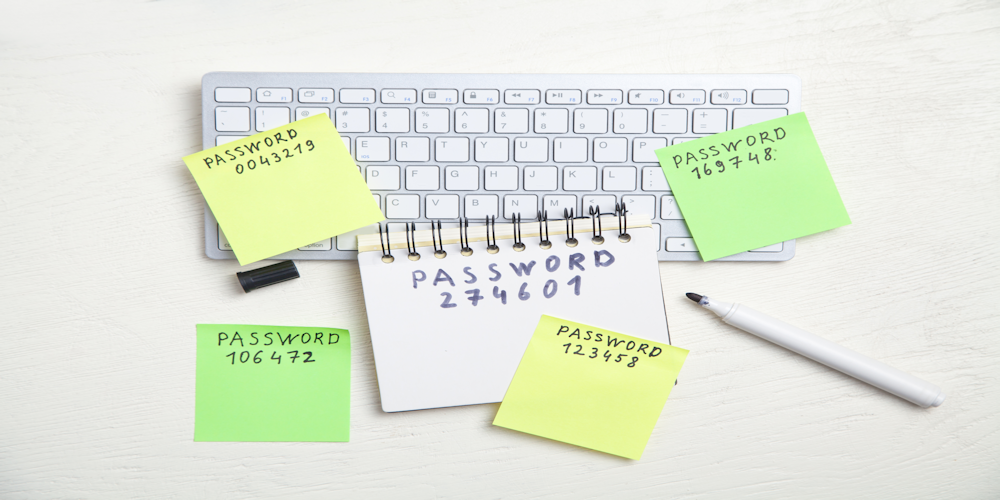
Most Popular Passwords of 2026: Still Using ‘12345678’
We’re barely a month away from 2027, yet millions of people are still relying on passwords like ‘12345678’ to protect their online accounts. Despite all the noise around cybersecurity and hacks, you really couldn’t make it up.
That’s according to the latest, rather depressing report from NordPass on the most popular passwords people use worldwide, which again analysed leaked password databases circulating on the dark web to identify the most commonly used passwords.
And, unsurprisingly, not much has changed.
- Weak passwords like “123456”, “admin”, and “12345678” remain among the world’s most common choices.
- Researchers warn popular sports stars, games, and internet trends are also frequently used and easily cracked.
- Password managers, passkeys, and multi-factor authentication remain the best defences against account compromise.
Year after year, the same painfully predictable combinations continue to dominate the rankings. Simple number sequences, variations of ‘123456’, the ever-popular ‘password’, and ‘admin’ remain among the most frequently used credentials.
In fact, the top three have remained unchanged, with ‘admin’ and ‘12345678’ taking second and third place respectively. If that doesn’t tell us how much work still needs to be done to improve password security, nothing will.
Sports stars and pop culture are password favourites
It’s not just numbers and obvious words people rely on. NordPass also looked at passwords inspired by celebrities, sports stars, video games, anime and popular culture.
Interestingly, sports-related names proved particularly popular, with basketball superstar LeBron James topping the list. Lionel Messi, Frank Lampard and Robert Lewandowski also featured prominently.
Curiously, Cristiano Ronaldo, Travis Kelce, and Tom Brady made no similar impact.
Gaming and anime references also featured heavily, while words such as Savage, Roblox, Skibidi, Covid and Impostor appeared frequently.
But before you think using your favourite footballer, gaming character, or internet meme makes for a clever password, think again.
“Fandoms make for terrible passwords,” NordPass warns, pointing out that many of these combinations could be cracked in seconds.
AI is making weak passwords even more dangerous.
TechRadar reports that the continued popularity of ridiculously simple passwords is particularly concerning given how much more sophisticated cybercrime has become.
Most online services now encourage, and sometimes require, users to create stronger passwords with a mix of uppercase and lowercase letters, numbers,s and special characters. Yet millions of people continue to favour short, predictable combinations that are easy to remember but equally easy to guess.
Cybersecurity experts have been warning for years that passwords are one of the weakest links in online security. Unfortunately, the emergence of artificial intelligence has made the situation even more worrying.
AI-powered tools are helping cybercriminals automate and accelerate password-cracking attempts, while also making it easier to steal, analyse and exploit leaked login credentials.
And it seems barely a week goes by without news of another major data breach involving millions of compromised passwords.
Although many stolen credentials are encrypted, that doesn’t necessarily mean they’re safe forever. Advances in computing technology keep creating new challenges for existing security measures.
There really is no excuse for weak passwords in 2027
The frustrating thing is that protecting your online accounts doesn’t have to be complicated.
For starters, enabling multi-factor authentication (MFA) wherever possible adds another layer of protection, even if someone gets hold of your password.
Better still, users should consider moving towards passkeys and biometric authentication, such as fingerprint or facial recognition, wherever these options are supported.
Password managers are another simple solution. Many are available for free and can generate long, unique and highly secure passwords for every account. They can also store and automatically fill in login details, so you don’t have to memorise dozens of complicated combinations.
Ultimately, convenience should no longer come at the expense of security. Reusing passwords or relying on predictable combinations puts personal information, financial details and online accounts at unnecessary risk.
We’ve had years of warnings, countless data breaches and more than enough reminders about the importance of online security.
So, as we head into 2027, let’s make one thing clear: if you’re still using ‘12345678’ as your password, it’s time to change it. Seriously, get it together, people!